By imagi Team on Aug 19, 2026, 4:50:13 AM
On June 5th, imagi CEO Dora stood on the TEDxSSE stage in Stockholm and asked the audience a simple question: who runs the world? They laughed and shouted back the answer she expected. But today, she said, she thinks it's AI. And most of her days are spent thinking about what that means for the kids sitting in classrooms right now. Not someday in the future. Right now.
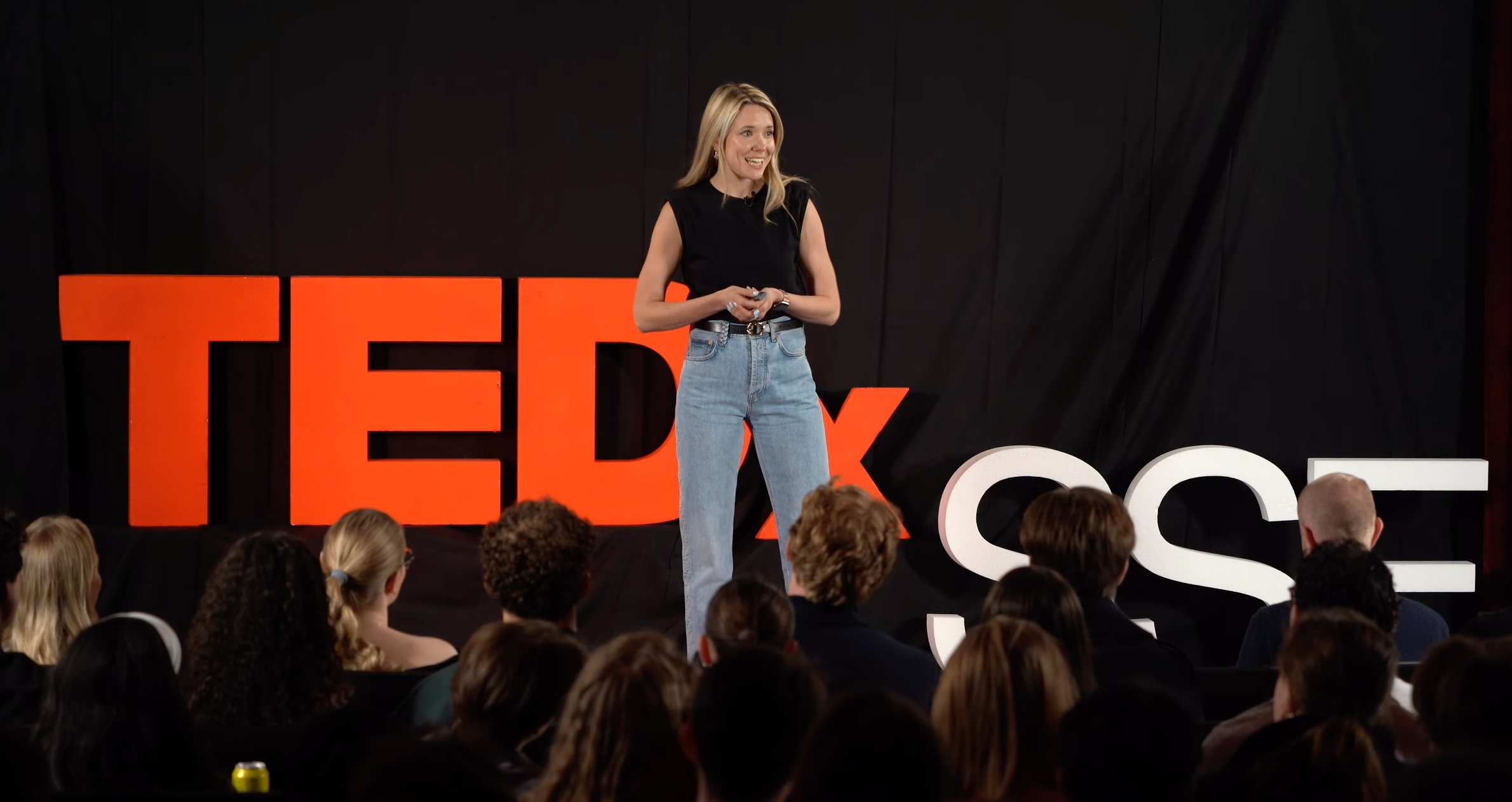
Education is a topic everyone has an opinion on, she pointed out, because we were all students once. We loved a teacher, dreaded a class, or both. So when Dora says AI is about to reshape how kids learn as much as anything before it, she's not speaking in the abstract. She's talking about the real classroom down the hall.
Behind Dora, on screen, was a simple visual: each dot stood for 3.2 million people, and 84% of those dots had never touched AI. That's who Dora's fighting for. It's not the students in that room headed for tech careers, but the ones who'll never get near a tool like this unless a teacher hands it to them. And this needs to happen now.
Schools fear first, and that's okay, up to a point
Most new technology follows a familiar curve: excitement, a peak of inflated hype, a dip, then steady growth. Dora noted that education runs the opposite pattern. Hesitation first. Then a peak of fear. Only later comes the "we can't ignore this" moment, followed by cautious pilots.
We saw the same thing with computer and internet adoption, she reminded the room. The personal computer took roughly twelve years to reach 40% adoption among U.S. households. The internet took about five. Generative AI did it in two. People were certain kids would stop learning to think for themselves. Some schools tried to block it altogether.
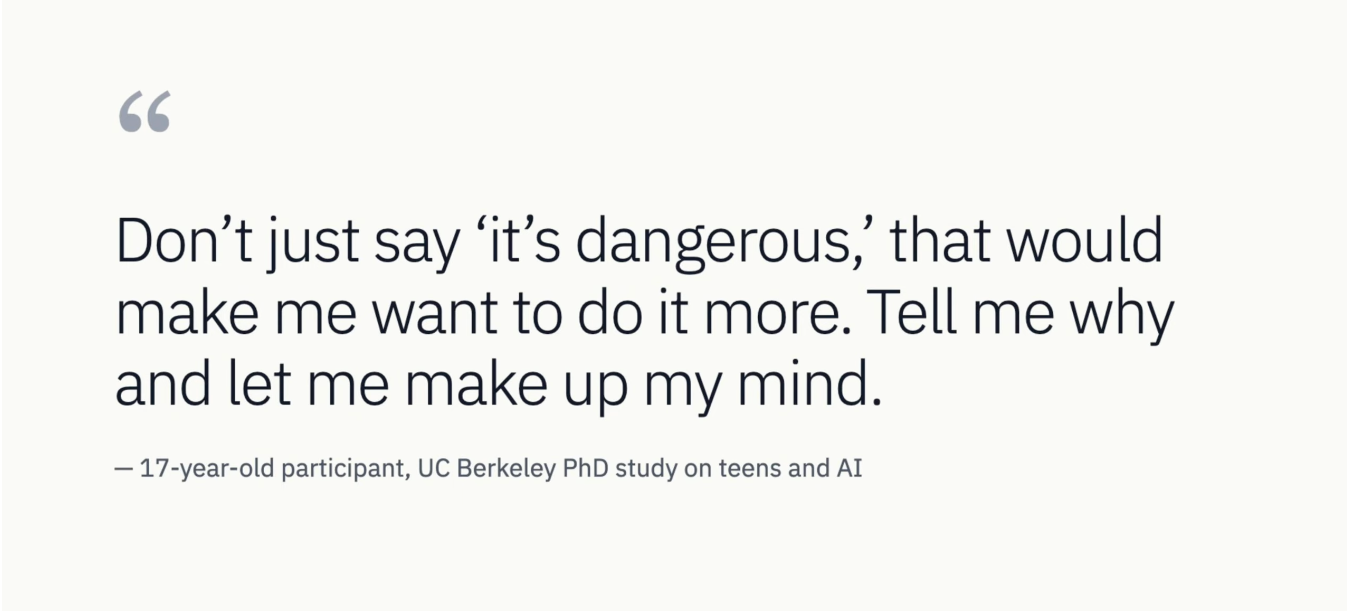
Yet, four out of five students are already using AI for schoolwork, according to Stanford's AI Index. So the real question was never whether kids would use it. It's whether someone teaches them to use it well, or leaves them to figure it out on their own.
Access, not intent, decides who benefits
Dora's favorite story from the talk is the smallest one. In 1968, a mothers' club at a Seattle school pooled their yard sale money to buy a single computer terminal. Out of roughly 300 million high schoolers worldwide at the time, maybe 300 had access to anything like it. One of them was Bill Gates, who's said he can trace Microsoft back to that terminal.
Then she jumped to 2020. Before COVID, 24% of U.S. public schools sent devices home with students. By fall 2021, in the peak of COVID pressure, that number hit 96%. When schools have to move fast, they can.
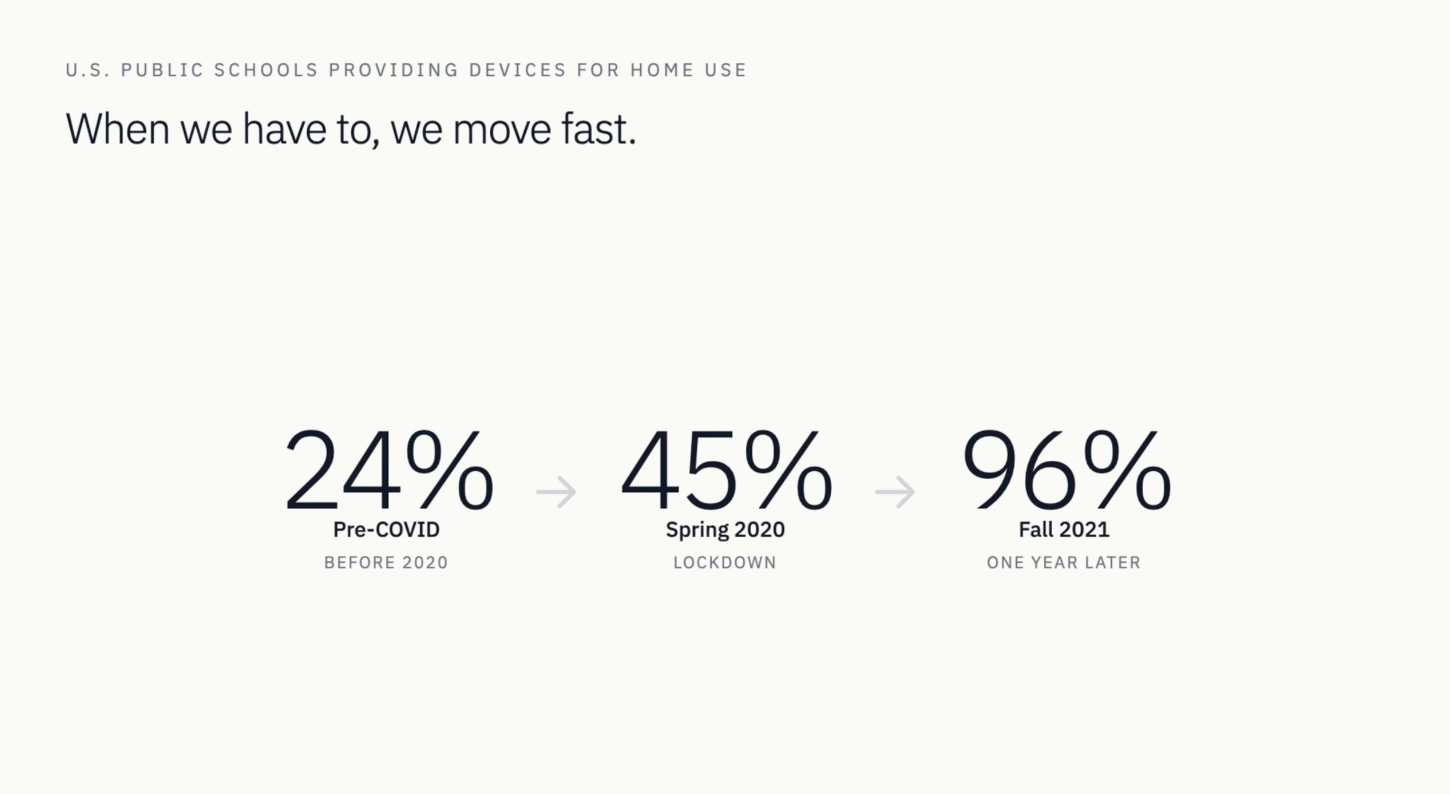
Dora hopes that we choose to move fast now, before AI access quietly becomes the next divider; the way that one yard-sale terminal once was.
Three shifts, kept simple
This isn't about adding one more subject to an already full curriculum. It's about rethinking the classroom itself. Dora closed with three things she believes every school needs to get right, in order:
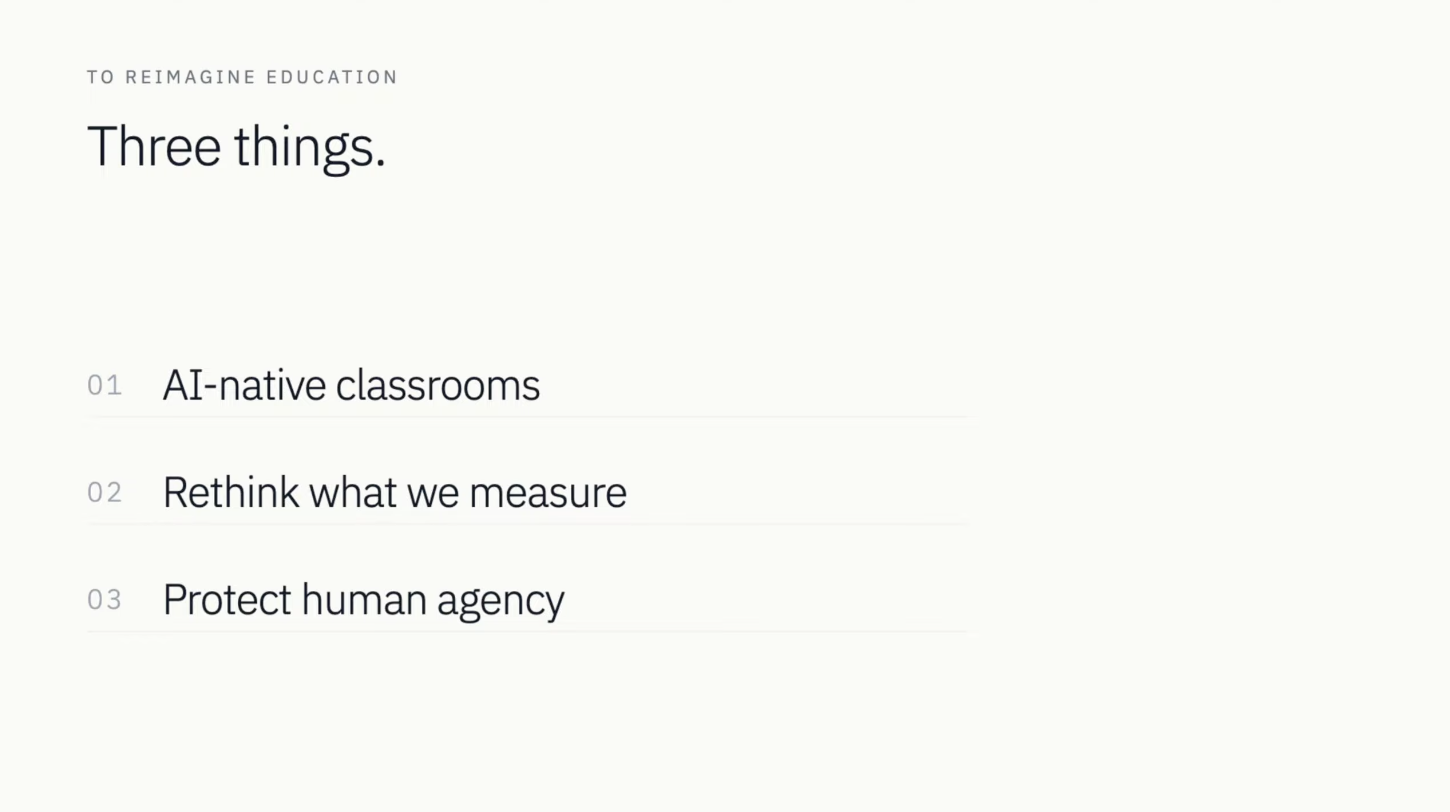
First, make classrooms AI-native.
Dora often points to an English teacher who tried to keep AI out of her class entirely. Twenty percent of the essays she got back looked suspiciously similar. So she emailed the class: if you used AI, let me know. Every single student responded. Kids are already using it. The job now is teaching them to use it well, which means AI woven into English, math, and science, not bolted on as a separate 45 minute period once a week.
Second, redesign what we actually measure.
The class that changed Dora's life wasn't the one where she got the best grade. It was Introduction to Computer Science, where she went from straight A student to genuinely behind, and didn't care, because she was building something real that hadn't existed until she made it. No test ever gave her that feeling. AI just lowered the barrier to that feeling for every student, in every subject, not just the ones who happen to take CS. But schools are still grading kids on whether they can produce the "right" answer, for a world that increasingly doesn't work that way. Entrepreneurship, not test taking, might be the most AI resilient skill there is.
Third, protect what makes us human.
In Dora's favorite college class, a neuroscience professor walked in holding an actual human brain on day one. He held it up and said there's nothing special about this organ, it's cells, it follows rules, and they were going to learn how. He wasn't wrong. But that's not the whole story either. That organ produces something no machine does. Judgment. Curiosity. The ability to decide what's even worth building in the first place. AI is trained on the past, by definition. The future still has to be a human job. That's not a nice sentiment, Dora argues. It's the actual design brief for what school should protect.
None of it, she said, is about choosing AI over kids. It's about making sure every kid, not just the lucky ones with access, gets taught to use it well.
A small ask
Dora's whole point was that one classroom isn't the world. More students need access.
If you'd like to help spread this message to a much bigger room, please vote for our session at SxSW. We need community votes to get our session, ‘Learning in Disguise: From Python Pixels to AI Apps’ to appear on stage. Then, more educators and more students will get that much-needed access to start AI-assisted coding. Vote here.
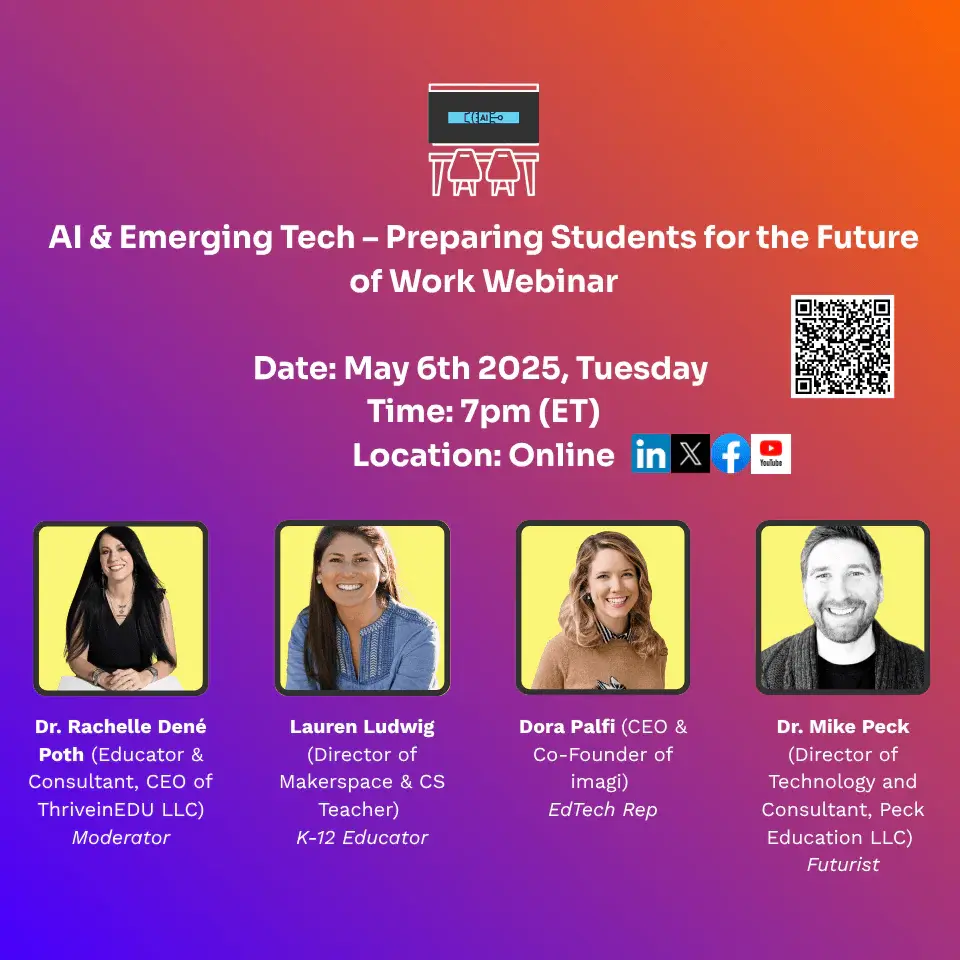
AI and Education: Empowering Teachers with AI Tools
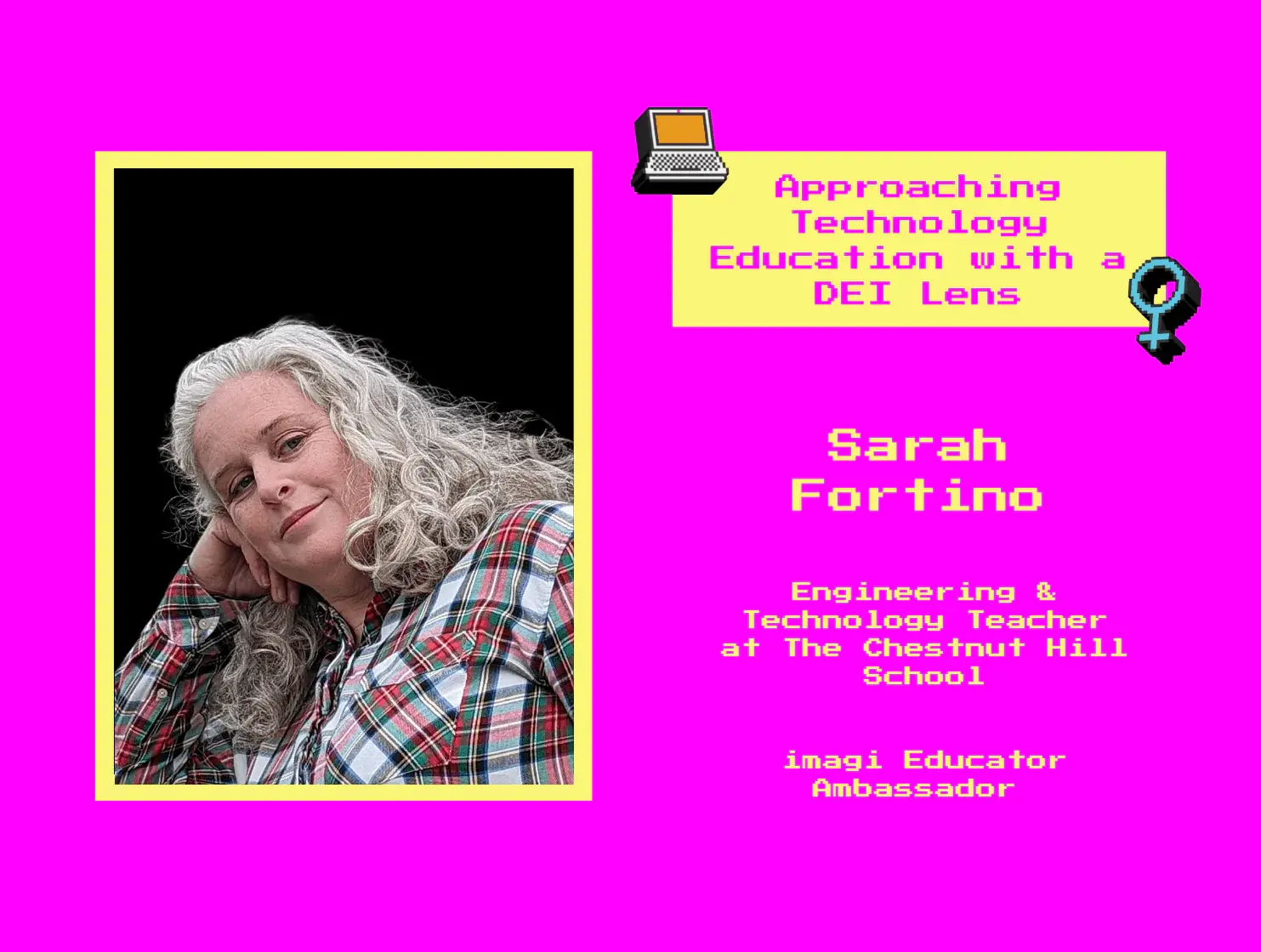
Approaching Technology Education with a DEI Lens